Is park and ride free? Separate parking from the bus fare
Free parking may still mean paid travel. Learn the three charging models and compare the total for everyone in your car.
Read the guidePlan your first UK park-and-ride trip: choose a site, check parking and bus tickets, save the right return stop and avoid common mistakes.
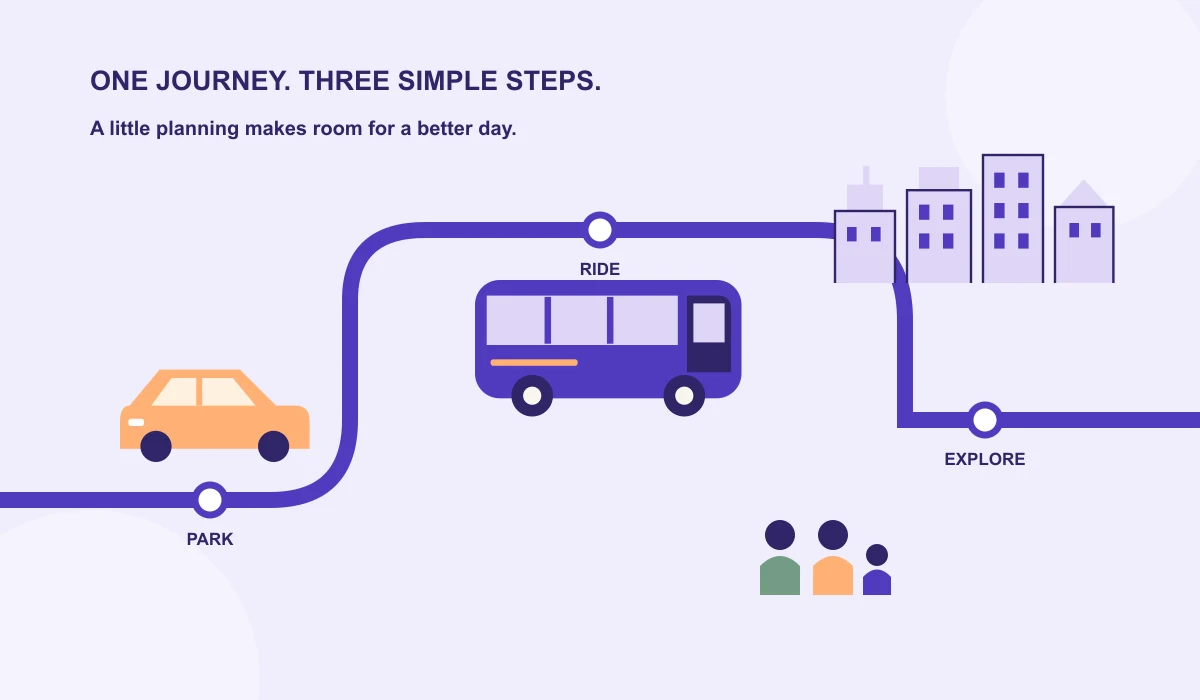
Park and ride lets you leave a vehicle at a site outside your final destination and continue by the advertised public transport service. The part that deserves attention is the whole journey: where you park, what your ticket covers and how you get back to the same car park. There is no single UK ticket or set of opening rules that covers every scheme.
Start with three questions: which site fits your approach, which stop serves your destination, and when will you return? Once those are answered, choose a valid ticket for everyone travelling. The park-and-ride directory brings together named sites and their official sources. Use it as your starting point, then follow the council or operator link for current service information.
The closest pin to the city centre is not automatically the most useful site. A sensible choice also considers the direction you are driving from and where the bus or tram leaves you. Write down your first destination and your likely final destination. They may be different: a morning appointment, an afternoon museum visit and an evening meal need a different plan from a short shopping trip.
Compare two suitable sites before leaving. For each, record the official name, postcode, onward service and city stop. This is especially useful where similarly named railway parking and bus parking sit close together. Follow the signs for the car park whose terms you checked, rather than assuming neighbouring spaces use the same ticket.
For an example of how local details matter, browse Oxford's park-and-ride options. Check the chosen site's own page rather than treating a citywide summary as permission for every parking area.
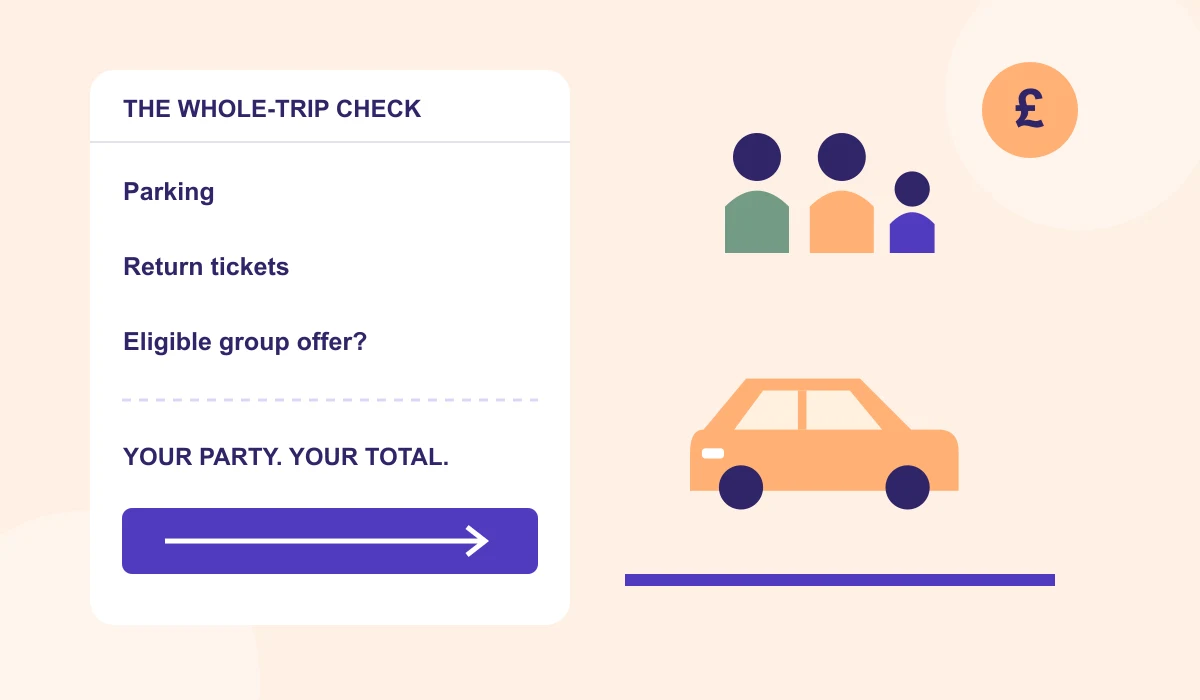
Ask two distinct questions: what does the vehicle's parking cost, and what does return travel cost for your party? Some schemes sell a combined product. Others charge for travel while offering conditional free parking. The correct total depends on the local scheme and your passengers.
Do not buy the first parking product you see without reading its name. A parking-only session may exclude the bus; a combined ticket may have a specific time limit or passenger limit. At Oxford Parkway, for example, the official council information distinguishes parking-only payment from its dated combined offer. That distinction matters more than the presence of an app logo.
Before paying, check the vehicle registration, site or location code, duration, number of people and accepted services. Keep the required ticket or active session accessible for inspection. Read how free parking differs from a free trip if the advertised headline is unclear.
List the adults and each child's age. Then compare eligible individual fares with any group or family product. Check how many children can accompany a paying adult, whether a teenager belongs in a different band and whether the group must travel together. A party that fits one city's product may not fit another's.
Use the whole-trip cost calculator once you have current prices. Enter the actual eligible fares rather than using zero for an unknown charge. Include parking once per car and transport according to the ticket's conditions. If the group arrives together but returns separately, confirm whether a shared ticket will still work before relying on it.
A price comparison is only useful when every option covers the same journey. Compare returns with returns, the same parking duration and the same passengers. A cheap single fare is not the cost of the complete day.
Take a note of the site name, service number and the stop where you need to board in town. Your arrival stop and return stop may be on different streets. Save the official route information so you can identify the correct direction, rather than choosing a bus simply because its colour or number looks familiar.
Check the last departure from the city, not just the last arrival at the car park. Also check the timetable for your day of travel. The City of York's park-and-ride guidance explicitly directs passengers to individual route timetables because operating times differ. Its car parks do not permit overnight parking.
Work backwards from your intended return. Allow time for the walk to the stop, any personal access needs and a missed departure. A last bus is a deadline, not a comfortable target. If your evening may run late, decide before travelling whether another permitted option better fits the visit.
Think about the transfer as well as the ride. Can everyone manage the walk from the parking bay to the stop, the waiting arrangements and the final walk into the city? If you use a wheelchair or scooter, check the actual service and both ends of the journey with the operator. An accessible parking bay alone does not answer those questions.
For a pushchair, a dog, luggage or a bicycle, read the operator's carriage policy. The First Bus accessibility guidance treats wheelchairs, mobility scooters, pushchairs and folding bicycles separately. Its guidance is useful for First services; confirm the company operating your chosen route before applying it elsewhere.
Check toilet and waiting-room hours independently of car access. A building can close while a site remains accessible. Pack what your group needs for the transfer and keep the return ticket available without unloading the day's bags.
The example below is a planning template, not a timetable or a claim about a real site. Fill it with current details for your chosen journey. Keep one version with the driver and share the return information with anyone who might leave separately.
| Decision | Your note |
|---|---|
| Car park | Official name, postcode and correct parking operator |
| Ticket | Parking product, passengers covered and return evidence |
| Outbound | Service, destination stop and any connection |
| Return | Stop name, direction and intended departure |
| Deadline | Last usable service, vehicle access and maximum stay |
| Fallback | A second permitted site or a different transport plan |
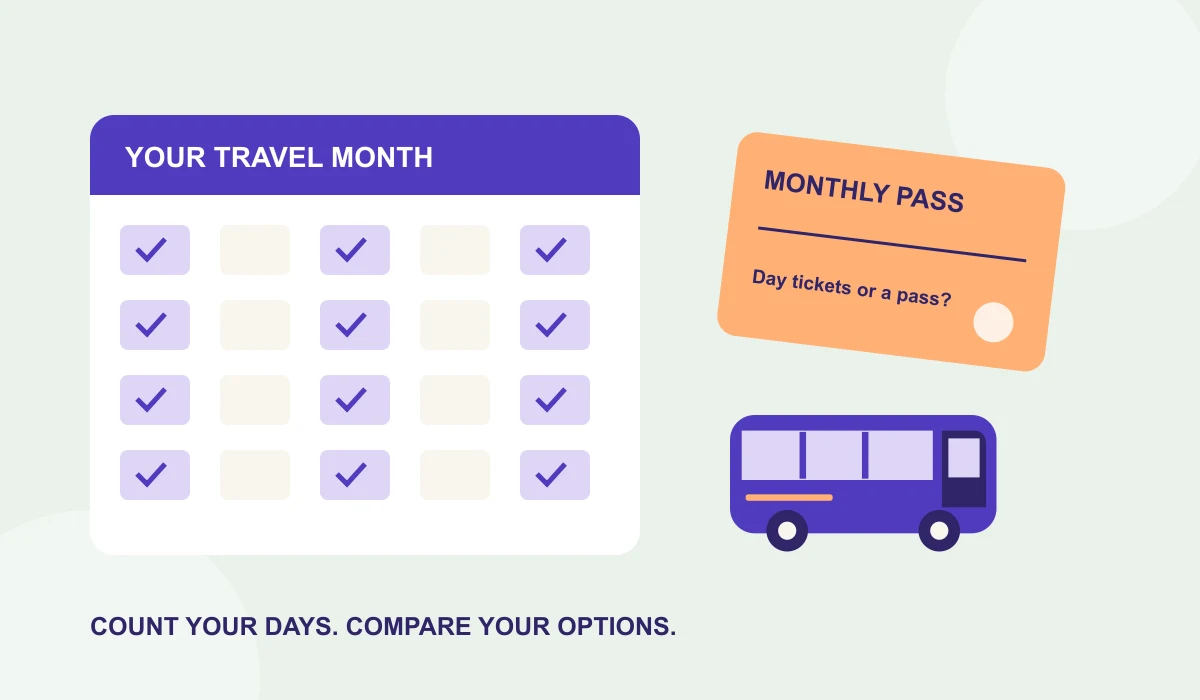
For a regular journey, keep the trip card and update it when the timetable changes. A one-off day ticket may also be the wrong long-term choice; the commuting cost guide explains how to compare actual travel days and passes.
If the car park is full, go to an alternative whose rules you have checked. Do not assume an adjacent retail or station car park is an authorised overflow. If the bus is disrupted, use the official service information and operator advice before buying a replacement ticket or leaving the vehicle longer.
Likewise, missing the planned return does not create permission to leave a car overnight. The Newbridge official site information illustrates why overnight access and charges need their own check: its rules differ from York's. Treat every changed plan as a new parking-duration and return-ticket question.
Recheck the official sources close to departure, especially for bank holidays, events and temporary works. Save the important details, leave a workable margin and choose a trip that fits your needs rather than forcing the cheapest headline into an unsuitable day.
Source checks and examples relate to the publication date. Check the operator before travel. Read our editorial and correction policy.
Free parking may still mean paid travel. Learn the three charging models and compare the total for everyone in your car.
Read the guideBuild a fair commuting comparison using your attendance days, separate parking and bus costs, and a pass break-even check.
Read the guide