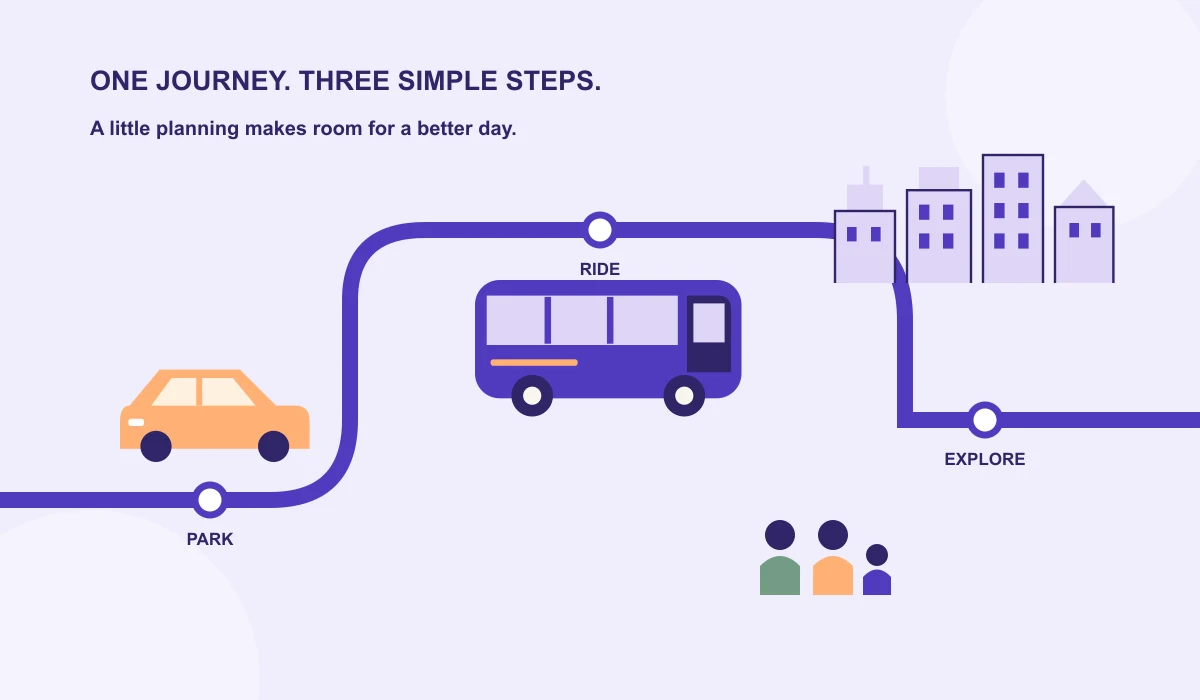
How does park and ride work? Your first-trip checklist
A practical first-trip guide, from choosing the right approach road to keeping a reliable return plan.
Read the guideUnderstand free parking, separate fares and combined tickets, then compare the complete return cost for your family or group.
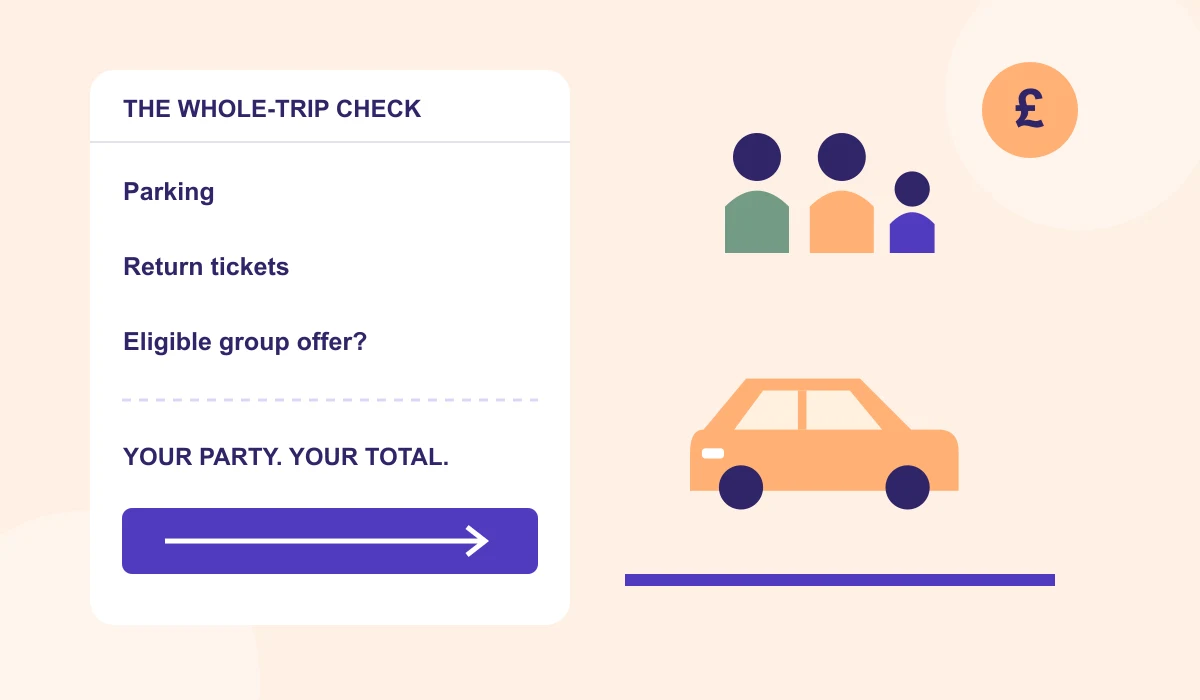
Park and ride is not automatically free. A site may offer free parking but charge for the bus or tram, charge separately for both parts, or sell one ticket covering the car and an eligible group. Even free parking can depend on using a particular service or returning within a stated period.
The useful question is: “What will our complete return trip cost?” Count the vehicle, everyone travelling and the intended parking duration. Then check the local rules. This guide explains how to compare them; it is not a national price list. Start with the sourced park-and-ride directory and read the official page for your chosen site before paying.
| Model | What to add | What needs checking |
|---|---|---|
| Free parking with paid travel | Eligible return fares or a group product | Bus-user conditions, maximum stay and next-day collection |
| Separate parking and transport | One vehicle's parking plus the party's return travel | Payment systems, duration and accepted tickets |
| Combined product | The combined price plus anything excluded | People, vehicle, service and time limits |
Use the product description, not just the name “park and ride”, to identify the model. Two sites in the same region can have different parking arrangements. Your receipt might establish parking permission while a separate ticket establishes your right to travel. Keep whatever evidence the local operator requires.
If any component is unknown, keep it labelled unknown until you can verify it. Entering £0 makes a calculator look precise while concealing the very question you need answered.
The Cambridge pricing page describes free parking for up to 18 hours, with charges for longer stays. That does not make the onward bus free. Its ticket page also distinguishes adult, child, group and concessionary products. Check it for current eligibility rather than bringing a child-fare assumption from another city.
At Oxford Parkway, the council advertises a dated combined parking-and-bus offer from 17 August 2026 to 31 March 2027. It covers up to five people and up to 16 hours for one car. The dates, duration and passenger limit are part of the product, so an old screenshot of another offer is not enough.
These examples were checked on 19 October 2026. They show different charging structures, not a promise that either is the cheapest for your visit. Local tariffs and offers can change; use the live official sources and Oxford directory information when planning.
Write down your passengers before comparing a group ticket with individual tickets. Include children's ages and check which adults qualify for a concession. A five-person product is not necessarily a family ticket, and a free-child allowance may depend on a paying adult and a particular origin stop.
Next, hold the parking duration constant. A short city-centre stay and an all-day park-and-ride ticket are different products. Compare the cost for the visit you actually intend to make, including any evening or next-day time.
Finally, compare the same return journey. A ticket starting at a park-and-ride site may have different conditions from one starting in the city. The First York ticket information specifies origin and validity conditions for its products. Read those conditions before treating two similarly named tickets as interchangeable.
Here is an illustrative calculation using fictional prices. It is not a tariff for a named city. Suppose parking costs £2.50, an adult return costs £4, a child return costs £2, and an eligible group return costs £11 for up to five people travelling together.
Two adults and two fare-paying children would pay £12 for individual bus tickets: 2 × £4 + 2 × £2. Adding parking gives £14.50. If the £11 group product covers those passengers and both journeys, the total becomes £13.50. The group option saves £1 in this example.
Now suppose both children qualify for free accompanied travel on the individual adult products. Individual travel becomes £8 and the total £10.50, making the £11 group product less useful. The arithmetic did not change; eligibility did. Use the park-and-ride cost calculator with the correct local inputs and keep its assumptions beside the result.
A free parking offer can be tied to a behaviour, a duration or a ticket. Check whether you must use the bus, return on the same day or keep proof of travel. Do this before deciding to walk, cycle, meet someone or leave the vehicle for a hotel stay.
The Travelwest FAQs distinguish parking for bus users from other parking uses. Follow the individual site page for the precise rule. A statement about one region's schemes should not be copied into a general UK permission.
If you change the visit halfway through the day, recalculate the parking duration and check whether your original conditions still apply. A ticket valid for the outward journey may not cover a later return, and paying a bus fare does not erase a site's maximum stay. Ask the parking operator when the terms do not resolve your particular plan.
If someone has a concessionary pass, verify acceptance, eligible boarding times and any park-and-ride-specific charge. Price companions separately. A free bus journey would still leave any applicable parking charge to consider. Do not assume the concession transfers automatically between operators, places or modes.
For payment, distinguish a bank card buying a specified ticket from a tap-on system calculating a fare. Also distinguish the bus reader from a parking machine or app. Ask for the intended ticket and check what the confirmation actually says.
For a combined product, confirm that you selected the combined option rather than parking only. Save its validity and any proof needed on the return. If you are unsure whether a payment worked, use the official support route; a banking notification by itself may not explain which product you bought.
For the alternative, enter the city-centre charge for your intended duration and vehicle. Add only costs that genuinely differ between the routes, such as extra driving distance. If both plans share most of the drive from home, charging that shared distance to just one option distorts the answer.
Keep time and convenience visible as separate decisions. A cheaper group total can still mean an unsuitable final walk, an awkward return or a transfer that does not meet your needs. Conversely, a slightly higher fare may be worthwhile for your particular day.
For regular travel, compare actual attendance days and eligible passes instead of multiplying a leisure-day price indefinitely. The commuting cost guide and commute calculator cover that next step.
If this is your first trip, the first-trip checklist covers the journey beyond price. Read the official terms again close to departure and treat any unresolved charge as a question to answer, not a saving already made.
Source checks and examples relate to the publication date. Check the operator before travel. Read our editorial and correction policy.
A practical first-trip guide, from choosing the right approach road to keeping a reliable return plan.
Read the guideBuild a fair commuting comparison using your attendance days, separate parking and bus costs, and a pass break-even check.
Read the guide